
How to Search the Lansing Court Docket
Misdemeanors, traffic matters, and city civil cases in Lansing belong to the official MiCOURT D54A search. Results there are tied to one court. A public record can list the case number, type, filing date, status, and public events. Still, it is never the clerk's certified record. If the caption names Circuit or Probate instead, take the county route. The split matters here. A Lansing district proceeding can be followed by a separate Circuit case. That happens after a felony bindover.
- Read the court abbreviation and case type on the Lansing citation, notice, or caption.
- Search MiCOURT D54A by the case number when it is available, or use the narrowest public name search.
- Capture the Lansing court, case type, filing date, public status, and the event being checked.
- For a Circuit or Probate caption, switch to the Ingham Court Record Search or its hearing schedule.
- When a setting is important, confirm it with the court because online calendars can change.
MiCOURT's public form asks for a last name or business, makes first and middle names optional, and includes a birth-year field plus a separate panel for year, number, and type. A shared Lansing name proves nothing. Match the court, case number, category, and date together before treating a common-name result as the right person.
Lansing 54-A Docket Route
The 54-A District Court handles Lansing's district cases. For local service, the official Lansing 54-A court page carries forms, civil information, and payment links, while MiCOURT is the public case-search layer. So a Lansing court docket search has two parts. The state system gives court-specific public results. The Lansing page gives the local service path.
| Lansing question | Starting route | Record to keep |
|---|---|---|
| District public case | MiCOURT D54A | Case number, type, filing date, status |
| Upcoming Lansing event | MiCOURT or 54-A calendar information | Date, time, room, judge, event |
| Traffic response | ePAY or 54-A Court Innovations | Ticket route, deadline, review status |
| Circuit or Probate matter | Ingham record search and hearing schedule | Court, code, register entry, calendar date |
That two-part structure guards against a common Lansing mistake: assuming a city address makes every matter a 54-A case. The court abbreviation on the case is the safer routing fact.
The Lansing Municipal Court
Lansing has no separate court officially named a municipal court. The city's district court is 54-A. Its Lansing docket covers the district-level work assigned to that bench: traffic and municipal civil infractions, misdemeanors, preliminary felony proceedings, and civil cases within the court's authority. So a Lansing felony may show up in 54-A early on. After bindover, it continues under a new 30th Circuit case number.
The published Lansing judge roster names Stacia Buchanan, Tony Flores, Kristen D. Simmons, Cynthia M. Ward, and Magistrate Laura Millmore. All serve in official roles. A public Lansing calendar may show a judge column. That field tells you who presides over the event. It is not a way to match a person to a case by name alone. Lansing's official judge page publishes that roster for current office context.
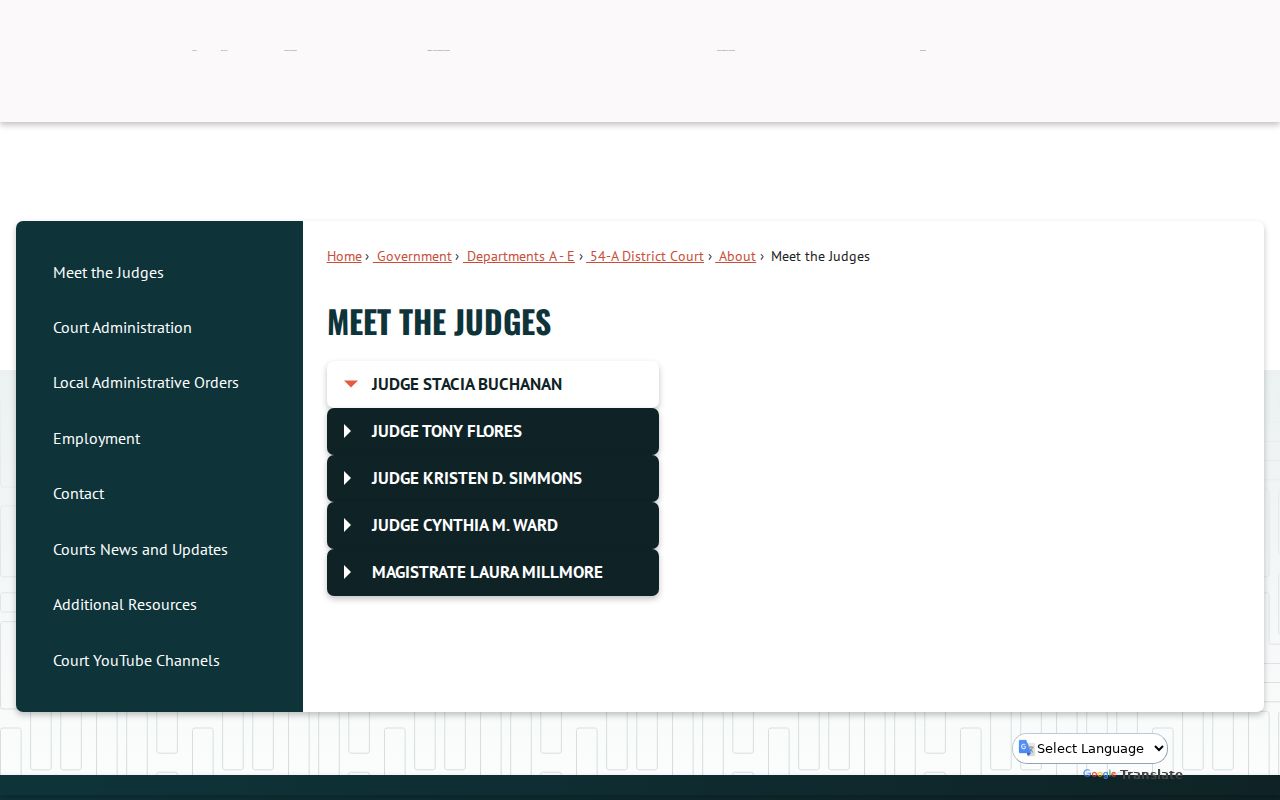
The roster helps when a public Lansing calendar shows a judge column. For the actual case record, the docket and the clerk remain the sources.
Lansing Court Venue Check
Lansing is Michigan's capital, and that can muddy the venue. A state-agency appeal may appear in Circuit Court under an agency-specific code. That can happen even when the event occurred in Lansing. A City of Lansing ticket, though, stays a district matter. Check the caption, issuing agency, case number, and filing venue before picking a search tool. That quick check keeps you from hunting a Circuit appeal in the Lansing district docket.
At the county level, Circuit Court handles felonies, family matters, appeals, and civil claims above $25,000. Probate holds estate, guardianship, conservatorship, and related files. Once a Lansing search moves into either county system, use the Ingham record search by party. A direct case-number route also works. The county format is YY XXXXXX CC. Public instructions say criminal coverage begins in 2000. Other Circuit or Probate coverage begins in 1986. There is no promise that every document is online. For current local forms and civil service details, the Lansing civil cases page is the place to consult.
That Lansing service page helps separate a local civil inquiry from a Circuit filing that runs through the county court system.
Lansing Court Dates and Settings
A Lansing setting is an event on the case history or calendar. It might be an arraignment, pretrial, motion hearing, trial, review, or another court event. The calendar date is not a final outcome. An adjourned entry just means the event moved; the case did not vanish. Lansing schedules can change. Check the setting again close to the appearance date.
| Date | The Lansing event date shown on the public record or calendar. |
|---|---|
| Time | The docket-call or listed hearing time, subject to the court's current schedule. |
| Courtroom | The room or location field supplied for a Lansing event when public. |
| Judge | The public roster or calendar field for the presiding judicial officer. |
| Setting type | The event label, such as arraignment, pretrial, motion, trial, or review. |
County-level cases work through the Ingham Hearing Schedule, which takes a case number or party information. It returns past, current, and future events by case number. The court warns that settings may change without notice.
Lansing Forms and Case Service
The Lansing forms route is a local service path, not a docket search substitute. It helps a Lansing user find current forms. It also gives court instructions once the proper court is known. Keep the original case number and court abbreviation with any request. A form, a register entry, and a certified copy do different jobs. The register lists the chronological history. A filed document is part of the case file. A certified copy is authenticated by the clerk. The official Lansing court forms page is the current source for that local entry point.
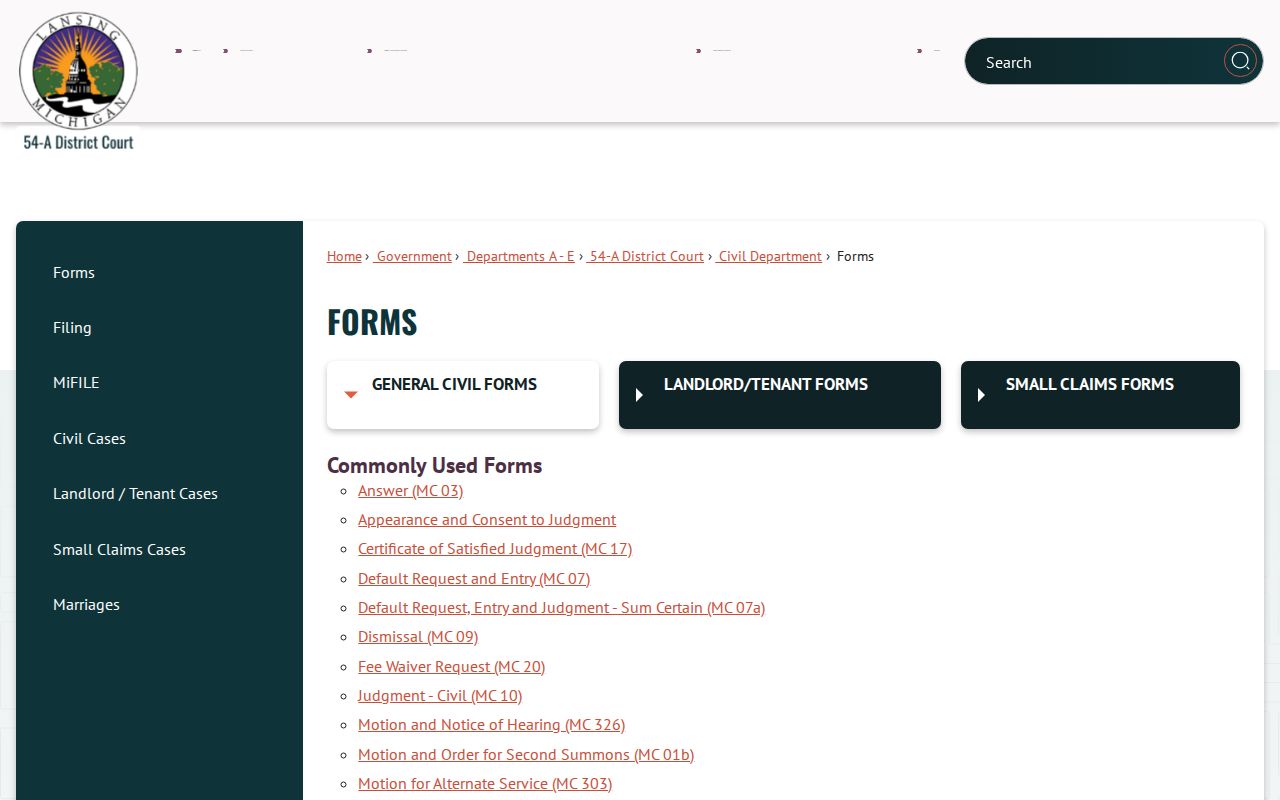
Once the correct court and public case number are confirmed, this Lansing source supports a narrow records request.
Lansing Traffic Tickets
Start with the ticket itself. It names the court and agency handling the case. Route your Lansing traffic docket accordingly. Michigan ePAY lets you search by ticket or case number. You can also search by name and date of birth, or by driver license or plate where the form allows. Keep those identifiers inside the official search. If ePAY returns nothing, your deadline still stands. Some Lansing traffic cases also fit the 54-A Court Innovations review route. Eligibility depends on the case.
Paying a ticket, asking for online review, and contesting it are three separate choices. Save the response method, date, agency, and court alongside whatever the search returns. A docket entry may show status, setting, or disposition. It is no replacement for an official licensing-agency record.
Note: Confirm availability and the response deadline on the current court or ePAY screen. Do this before acting on a Lansing ticket.
Lansing Court Building Context
54-A sits inside Lansing City Hall at 124 W Michigan Avenue, and that is the practical spot for district-court service in the city. Circuit review happens elsewhere, at the Veterans Memorial Courthouse, a county function. Different courts, different doors, even when the case arose in Lansing. The court also lists three official numbers by function: 517-483-4433, 517-483-4445, and 517-483-4426. Check which line handles your need before calling.
The Lansing 54-A page shows the current court location and its service links.
Lansing City Hall marks the district-court setting here, not the records home for every Ingham County case.
Where Lansing Cases End Up
A Lansing case does not always stay in one building. Misdemeanors, tickets, and qualifying civil matters usually begin in 54-A. A felony can start at district arraignment or the preliminary stage, then move to Circuit Court by bindover. Family and Probate cases and appeals travel county-level routes. So do civil suits over the district limit. Read the caption and case type first. They tell you which court system holds the record.
Docket flow: Lansing district route › 54-A District Court › 30th Circuit Court or Probate Court when the case type requires county jurisdiction.
For the Circuit or Probate piece, use the county record search and hearing schedule. The broader Ingham County court docket overview maps the three district-court geographies and countywide routes.
Lansing Court Record Requests
When an online docket entry falls short, ask the clerk for the exact item. That could be a register printout. It could be a filed document, a certified copy, or a transcript. They are not the same thing. A Lansing district case belongs with the 54-A clerk. Circuit or Probate material goes through the county clerk or that court's own office. The clerk keeps the official file and decides access under current rules and local policy.
A blank search result does not mean no Lansing case exists. The query may have hit the wrong court or a transferred case. It may have met older coverage, a restriction, or an odd case-number format. Start with the court caption, then have the proper clerk confirm the file.
Lansing Search Result Limits
Treat any Lansing public search result as a finding aid. It is nothing more. MiCOURT limits some criminal conviction information to seven years from sentencing. It offers no bulk downloads, and skips nonpublic material. The Ingham county portal also warns that results are not the official record. Common names stay uncertain even with a date of birth. Before trusting a status label, match the court and case number. Then match the category and event sequence.
When a case seems to jump from 54-A into Circuit Court, search both routes. A bindover is the transfer of a felony from district court to Circuit Court. It may open a new county case rather than extend the Lansing district number. The official file and the clerk can confirm which path applies.
Public Access to Lansing Court Records
Public access to Lansing court records follows Michigan court-record rules. It does not follow the assumption that every electronic result is open or certified. MCR 8.119 requires clerks to keep a case history. That history is usually called the register of actions. The rule also allows public inspection of public records. Online results, local or statewide, remain informational. A court order, a statute, or a case category can still limit what you see. So can a protected-identifier rule.
Key Rules:
MCR 8.119 requires the case history and governs inspection, copies, and access standards.
AO 2006-2 governs privacy, redaction, and the response for nonpublic records.
MCL 712A.28 limits public access to juvenile records.
Adoption, juvenile and child-protective, PPO or ERPO, name-change, will, and mental-health matters may never appear in MiCOURT. A sealed or protected file stays sealed no matter what a search result or third-party site says. If a Lansing request gets restricted, ask the court directly for the access basis.