
How to Search Civil Dockets
For Circuit civil cases, the county offers the Ingham Court Record Search. It also offers a direct case-number route. Work one court at a time. The county form takes a first name with a last or business name. It lets you pick plaintiff or petitioner against defendant or "Respondant" roles, and it requires a Civil/Family case-type choice. Skip the punctuation in a business name, as the county instructions direct. For district civil and small-claims work in 54-A, 54-B, or D55, use the court-specific MiCOURT Case Search route.
Try the case number first whenever you can. The county route displays the pattern YY XXXXXX CC. Party searches take more care. Common names crowd the results, so compare the role, court, filing date, code, and business name before trusting a match. Keep in mind the public index may leave out some filed documents.
- Choose district court for the local claim or Circuit for a higher-value claim, appeal, or Circuit category.
- Enter the exact case number, or use the narrowest party or business search the route permits.
- Confirm the court, case code, filing date, and party role on the returned civil docket.
- Read entries in order, separating filed documents from hearing notices and signed orders.
- Use the clerk for a public document, certified judgment, or missing online entry.
Ingham County Civil Docket Court Split
Jurisdiction comes first when you track a civil docket in Ingham County. District court takes general civil claims under the statutory limit, plus small claims. Circuit court picks up civil matters over $25,000. It also takes appeals from district courts and agencies, plus some specialized civil cases. Lansing filings go to 54-A. East Lansing filings go to 54-B. The 55th District Court covers the rest of Ingham County. Probate court runs its own separate record universe for estates, trusts, guardianships, and similar matters.
| Court route | Typical civil docket | Public starting point |
|---|---|---|
| 54-A, 54-B, or 55th | Local general civil and small claims | MiCOURT and the district court page |
| 30th Circuit | Claims over $25,000, appeals, contracts, torts, and other Circuit civil classifications | Ingham Court Record Search |
| Probate Court | Estates, trusts, guardianships, and conservatorships | County Probate route and clerk confirmation |
Venue and claim type decide the route, not the city name alone. A city on a filing does not by itself tell you which court holds that Ingham County civil docket.
What a Civil Docket Shows
The register of actions works like a timeline. It lists each event in the life of a civil case, in order. Most Ingham County civil dockets open with a complaint or petition plus the filing fee. From there they move through summons and return of service, an answer or default, scheduling activity, motions, orders, judgment, and post-judgment events. One caution: a motion entry only shows that someone asked the court for relief. It does not prove the request was granted. Before you describe an outcome, look for the signed order. Check the judgment entered after that motion too.
| Case number and code | The court identifier, filing year, and civil classification such as [CK] for contracts when shown. |
|---|---|
| Party roles | Plaintiff or petitioner and defendant or respondent labels help distinguish similar names. |
| Service and response | Summons, return, answer, default, and related entries show procedural progress. |
| Settings and motions | Notices, mediation, hearings, and written requests are events, not final rulings. |
| Judgment activity | A signed judgment, dismissal, satisfaction, writ, garnishment, or appeal entry may explain disposition. |
Not everything makes it into the public docket. Entries can leave out exhibits, financial details, or nonpublic material, so the clerk's file and the actual order control what the record really says. Note: A register entry can name a filed document without making that document available for immediate public download.
Ingham County Civil Claim Limits
Money limits decide which Ingham County court takes your case. The 55th Civil Division handles general civil claims up to $25,000. Small claims there are capped at $7,000. The current 54-B Civil Division page lists the same amounts. An older 54-B general-information page, though, puts small claims at $5,500. That is a real discrepancy between official sources. Follow the current civil-division instruction. Confirm the filing requirements with the clerk before you rely on the older figure. The 55th Civil Division page lays out the Mason district route. It also posts the published limits it enforces.
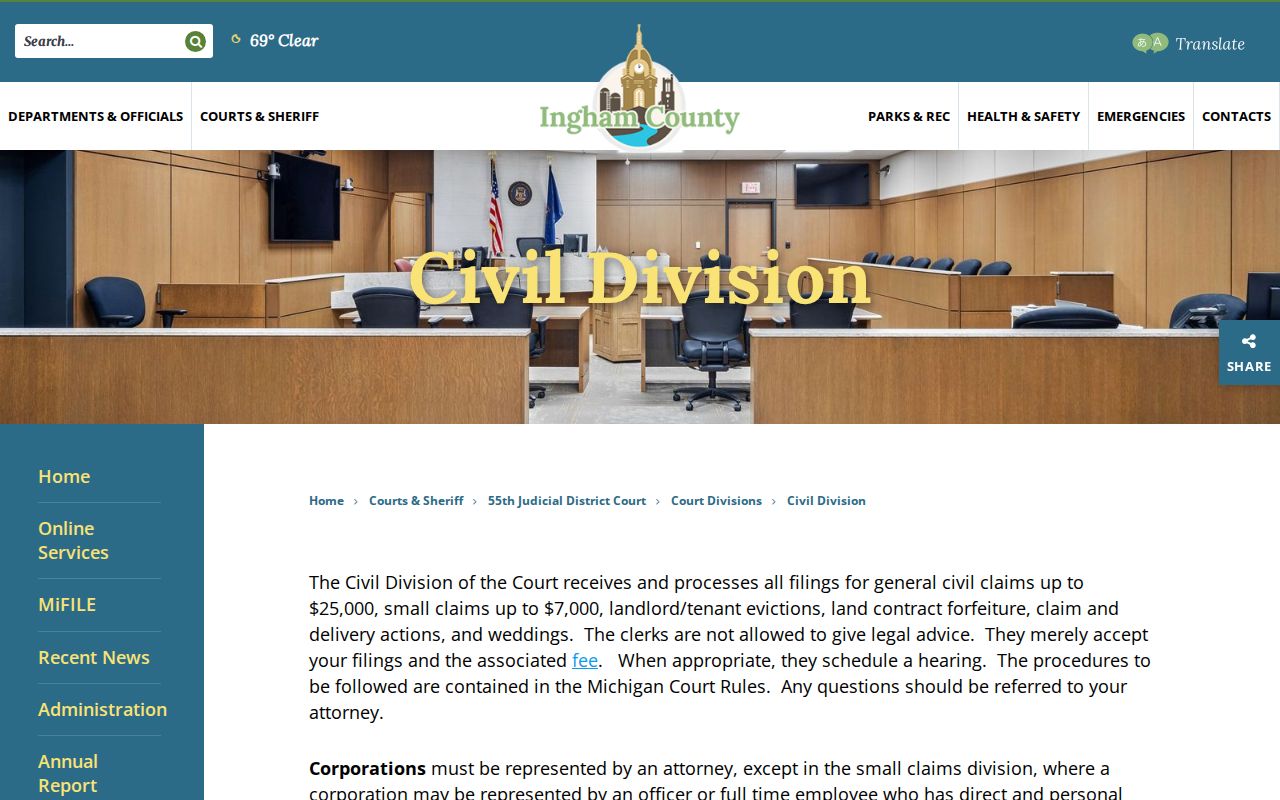
These civil-division limits tell you which Ingham County civil docket route fits your claim, but they are only a starting point. A clerk cannot advise you on which filing choice to make. Published dollar figures define the court's civil scope, so ask the clerk to confirm the current procedures and any court-specific requirements before you file.
Types of Civil Cases on the Docket
Ingham Circuit's code list sorts civil cases into several families. The labels help you find the right category in the public register. Still, they are no substitute for reading the complaint, the order, or the judgment itself. District dockets add small-claims and local general-civil work within the district limit.
- [ND] auto or property damage and [NF] no-fault matters.
- [NH] medical malpractice, [NI] personal-injury auto, and other injury classifications.
- [CK] contract claims and [CZ] general civil matters.
- [CC] condemnation, [CE] environmental, and [CF] forfeiture classifications.
- [AA], [AE], [AR], or [AV] appeal-related records, where both case numbers matter.
Ingham County Civil Docket Codes
Case codes are shorthand. They sort court records by type, nothing more. A code will not tell you who prevailed, what relief was granted, or whether the docket entry is public in full. Appeals need extra care. Keep the originating court, the lower-court case number, the Circuit filing, and the decision as separate records, because a later appeal never replaces the lower court's history. The Circuit Court dashboard posts the court's public-facing operational information for Ingham County.
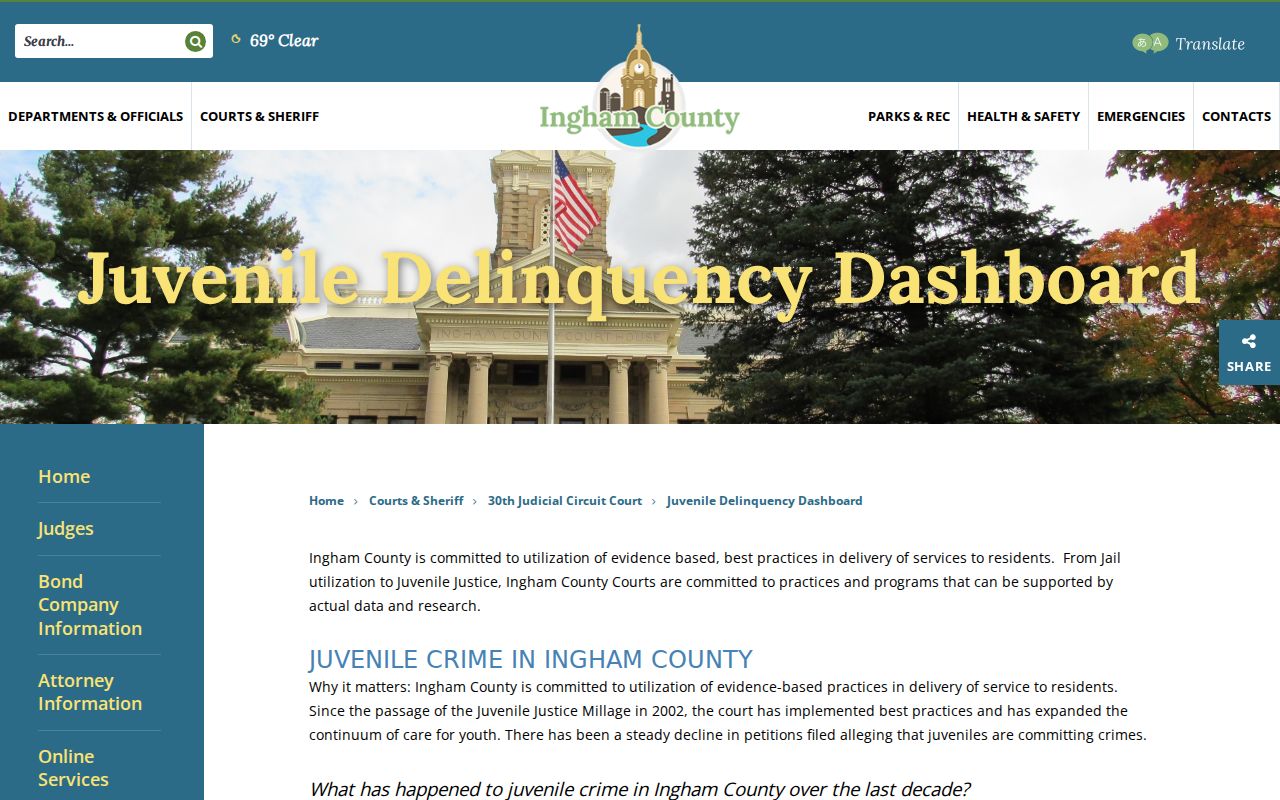
Pair the county case-type list with the docket entries themselves, and an Ingham County civil classification reads far more clearly.
Settings and Hearings on Civil Dockets
Civil settings come in several flavors on an Ingham County docket. A setting may be a scheduling conference or a settlement event. It may also be a mediation, a motion hearing, a trial, or a post-judgment review. For Circuit and Probate settings, the online county Hearing Schedule is the route to use. A name search gives you a forward window of court dates. A case-number search can pull past, current, and future events at once. District settings show up on the local calendar or through MiCOURT.
When a public result appears, write down the date, time, room, event type, and judge. Then recheck it close to the hearing. One caution matters here. A scheduled motion is a request, not a ruling. A settlement conference is not a judgment. The Ingham County court calendar offers the fuller route for confirming a setting.
Ingham County Civil Filing Routes
TrueFiling moves papers; it does not search dockets. Think of it as a filing channel only, not a public case lookup. The official MiFILE available-courts list shows court destinations and contact information. It covers participating Michigan courts, including Ingham district courts. Even after a filing goes through, it can take time to surface in an online index. The public display may not expose every document either.
So when the question is where a filing belongs, the official TrueFiliation destination screen is the page that answers it.
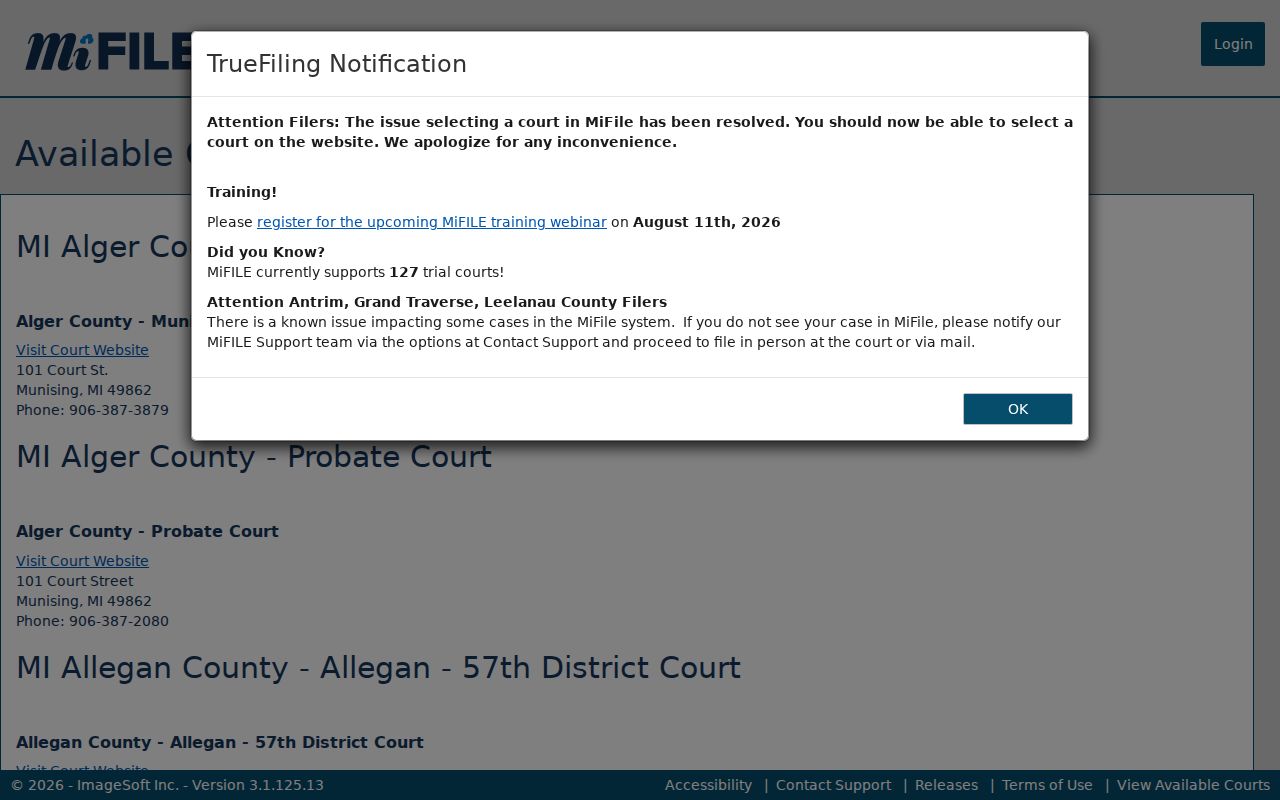
For an actual search, go back to the county register or the court-specific MiCOURT route. An e-filing destination is not a case result.
Ingham County Civil Motion Entries
A motion is a written request to the court. It is not a ruling. A brief supports it, a notice of hearing sets the date, and only a signed order supplies the ruling. Read the order. Labels such as summary disposition, default judgment, agreed judgment, dismissal with or without prejudice, satisfaction, and closed or disposed must be tied back to the actual order or judgment they rest on.
The public index may list an event, not its paper. Give the clerk the court and the case number. Keep names, addresses, account data, and exhibits out of any public summary. The real access question is whether the document is public, not whether a docket label exists.
Note: A civil docket can show a mediation or settlement event. The signed order explains whether a claim was resolved.
Public Access to Civil Dockets
MCR 8.119 governs the register of actions. It applies in every Michigan trial court. The rule also frames public inspection of public court records, copies, fees, and access orders. A case file is not a FOIA matter. Family, Probate, sealed, and protected personal information carry distinct limits. An online result may lag. It may omit documents or show a limited entry.
Public record boundary. MCR 8.119 governs registers, copies, public inspection, and sealing standards.
AO 2006-2 addresses protected identifiers and the response to public or nonpublic records.
Ask the records custodian whether the request is for inspection, a plain copy, a certified copy, or a record restricted by rule or order.
Ingham County Civil Judgment Copies
A portal printout is not a certified judgment. For anything official, the office to ask is the Ingham County Clerk of the Circuit Court. It handles Circuit filing and record functions. Its counter staff can explain the current copy and certification process. Give them the case number, the document you need, and your certification and delivery questions. District cases run through 54-A, 54-B, or the 55th instead.
The Ingham County Clerk of the Circuit Court page explains the county clerk's role. It covers Circuit filings and certification.
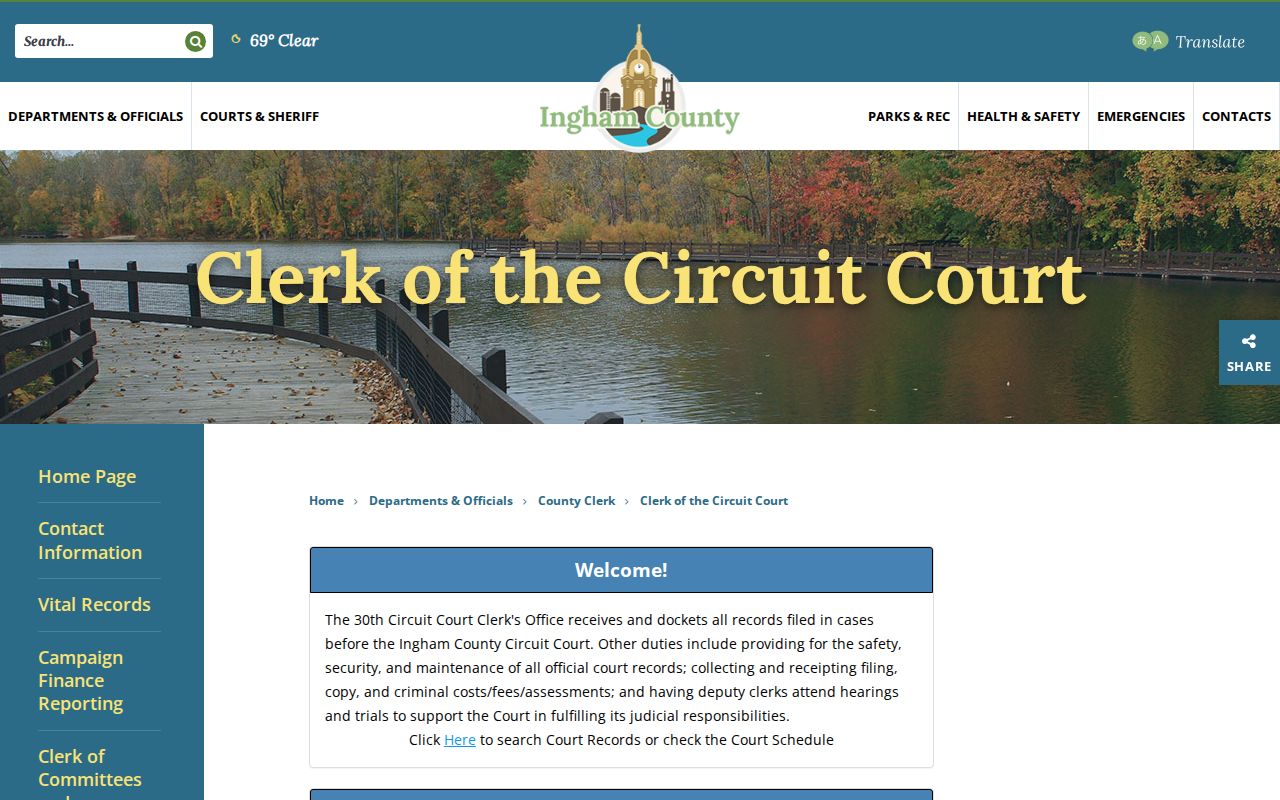
For paper behind a docket entry, ask the clerk.
Ingham County Civil Docket Transcripts
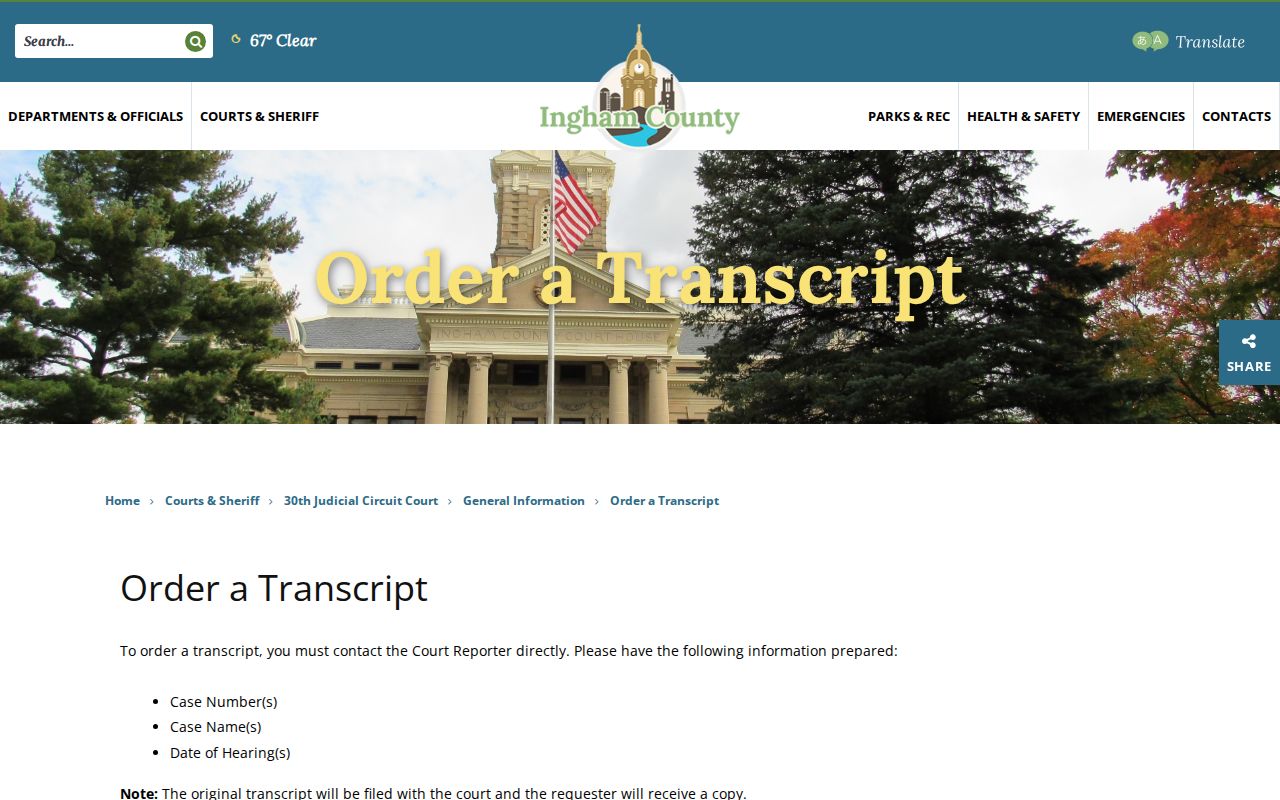
A transcript is not a docket entry. It is not a clerk copy either. A court reporter prepares it. When you ask where to send a request, keep the case number, hearing date, judge or courtroom, and record type separate. The Circuit Court's transcript information shows the current reporter and ordering process. The Circuit Court transcript-order page sets out the public ordering route for an Ingham County case.
Register, plain copy, certified copy, transcript. Each is a different ask, and keeping them straight sends an Ingham County civil records request to the office that actually holds the record.
Ingham County Civil Clerk Confirmation
Check the online docket index first. If an Ingham County record is missing, restricted, older, or just unclear, take it to the clerk counter or phone line. The 30th Circuit General Trial office sits at 313 W Kalamazoo Street in Lansing, 517-483-6500. The 55th District Court is at 700 Buhl Avenue in Mason, 517-676-8400. For 54-A, call 517-483-4433. For 54-B, the main line is 517-351-7000.
Have the court and case number ready. Then ask whether the item is public, open for inspection, or something that needs a copy or certification request. Against an online result, the official file wins.
Use the office that owns the case, since a Circuit Clerk request never substitutes for a district clerk's records process or the reverse. Note: Statewide search access can help you find a public case, but the clerk who keeps the file still decides copies and certification.
30th Circuit General Trial
313 W Kalamazoo St, Lansing
517-483-6500
55th District Court
700 Buhl Ave, Mason
517-676-8400